Here’s a comprehensive freelancer tax guide for Pakistan, tailored to your situation as you transition into married life and look to build long-term financial stability. I’ll walk you through why you must comply, how to register and file, what your tax rates may look like, how to claim deductions, and tips to avoid common pitfalls.
1. Why freelancers need to pay taxes
As a freelancer in Pakistan, even if you work for international clients, you’re not exempt from taxation.
- The Federal Board of Revenue FBR (https://fbr.gov.pk/) treats freelancers under the “Income from Business or Profession” head. (startup.pk)
- If you earn above a certain threshold (currently PKR 600,000 per annum), you must file returns. (ICT)
- Registering and being a “filer” brings benefits: easier banking, lower withholding tax, more professional credibility. (BeFiler)
- Failing to register or file can lead to penalties, higher deductions by banks, or being removed from the Active Taxpayer List (ATL).
Why this matters for you: Since you’re building a stable base and likely earning with your loved one beside you, getting your tax affairs in order now sets you up for smoother growth (e.g., business development, lending, formal contracts) and peace of mind.
2. Registering and getting started
A. Obtain your NTN
You’ll need a National Tax Number (NTN) via the FBR’s IRIS portal (https://iris.fbr.gov.pk/). (Tenco Consulting)
Documents usually required: CNIC, bank account certificate, address proof. (ICT)
B. Classify your income
- If you serve local clients (in Pakistan, being paid in PKR) → income taxed under normal slabs. (Taxation PK Blog)
- If you serve international clients (earning foreign currency, export of services) → there are special regimes/benefits. (BeFiler)
C. Optionally: Register with Pakistan Software Export Board (PSEB) if you provide IT/IT-enabled services
If you’re in the tech/digital space (and you are with OTS Company and precision engineering / digital twins etc) this may apply:
- PSEB registration can reduce tax rates for export services.
- Required for some special reliefs.
3. Tax rates for freelancers in Pakistan
A. Local services (Pakistani clients)
If you receive PKR payments locally, you are taxed under progressive slabs (net income after allowable deductions):
- Up to PKR 600,000: 0%. (Taxation PK Blog)
- PKR 600,001–1,200,000: 15% of amount above 600K. (Taxation PK Blog)
- Further slabs: e.g., 1,200,001–1,600,000: base PKR 90,000 + 20% on excess. Then up to 45% for >5.6m. (Taxation PK Blog)
Also banks will withhold tax on your receipts: for example from July 1, 2025:
- Filers: under PKR 10,000 → 1%; non-filers → 2%. (Taxation PK Blog)
- Similar rates for other bands.
B. Export of services (foreign clients)
If you provide services to clients outside Pakistan and the amount is remitted via banking channels:
- If registered with PSEB → tax rate ~0.25% (final tax) on gross export proceeds. (BeFiler)
- If not registered with PSEB → tax ~1% of gross export proceeds. (Ways Tax)
Important: For export of services you may not be able to claim many deductions—tax is often final. (Taxation PK)
4. Claiming deductions & keeping records
A. Deductions (mostly for local-income freelancers)
If you’re dealing with local clients: you can deduct legitimate business expenses before applying slabs. Examples:
- Internet & mobile bills used for work
- Software licences/subscriptions
- Portion of rent/utilities if home office
- Travel for client meetings, professional fees. (Taxation PK Blog)
For export income (foreign clients) under final tax regime, deductions may not be applicable. (Taxation PK)
B. Record-keeping
- Keep invoices, bank statements, receipts, contracts. (startup.pk)
- Separate business from personal finances (have a separate bank account if possible). (ICT)
- Maintain records continuously—not just at filing time.
5. Filing your tax return – step by step
- Register (if not yet) with FBR via IRIS for NTN.
- Gather all income (local + foreign), expenses.
- Determine your category: local vs export.
- If export, ensure you’ve used banking channels, have PRC (proceeds realisation certificate) if required. (BeFiler)
- Fill out Income Tax Return (IT-1 form typically) via IRIS portal. (Tenco Consulting)
- File before the deadline. For example, the effective deadline referenced is around September 30, 2025 for FY 2024-25. (Taxation PK)
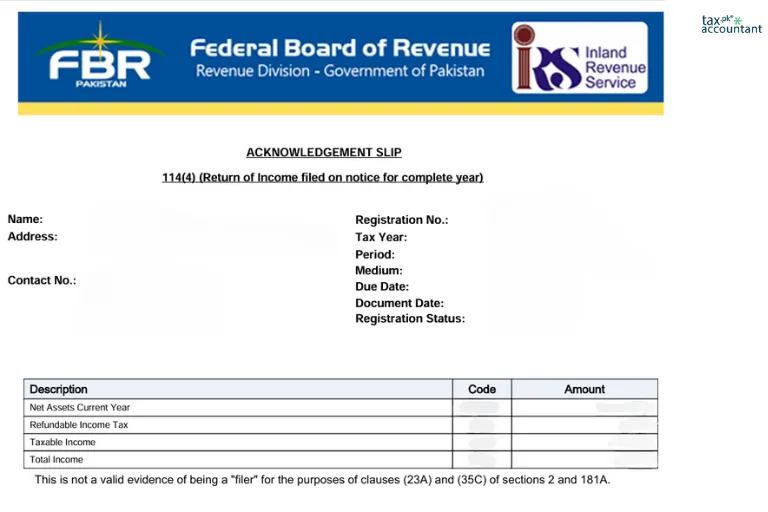
- Pay any tax due. Submit acknowledgement & keep for records.
6. Common pitfalls and how to avoid them
- Assuming foreign income is tax-free: Not true. Even if you earn abroad, you must report it. (Ways Tax)
- Under-reporting or mixing up income categories: Local vs export treatment differs.
- Not registering with PSEB when eligible: You may miss out on 0.25% rate. (reddit.com)
- Not keeping proper records: Makes deductions & audits hard.
- Missing deadlines: You may lose filer benefits or face higher withholding tax.
- Using personal bank accounts for business income: Makes classification and records messy.
7. Why this is good for you and your business
Given you’re working in precision engineering, digital twin solutions, Industry 4.0 (via your company), being tax-compliant strengthens your professional profile.
- Being a filer gives better credibility with clients, especially foreign ones.
- You set up strong financial discipline from the start, which will help when scaling your business or taking on formal contracts.
- If you ever register the business formally or expand into IT services exports, the PSEB route and export tax benefits apply.
- Peace of mind: you know you’re fulfilling your responsibilities and avoiding stress or legal issues in future.
8. Summary checklist
- Register for NTN with FBR via IRIS.
- Determine if you’re local-client freelancer or export-services freelancer.
- If export, check PSEB registration eligibility.
- Maintain business separate finances and detailed records (income, expenses).
- Know your tax rate: local slabs vs export’s final tax.
- File the return on time, pay tax due.
- Stay a filer / keep ATL status: lower rates, better banking.
- Review each year: as your income grows, your slab or rate may change.
For any Taxation guide, bother to read our blogs at https://taxaccountant.pk/!