
Tax Accountant

Author: Umair Ar Mughal

  • Best S24 Ultra PTA Tax Guide 2026 – Updated Tax Rates & Registration Steps

    Best S24 Ultra PTA Tax Guide 2026 – Updated Tax Rates & Registration Steps

    Best S24 Ultra PTA Tax Guide 2026.

    Buying a Samsung Galaxy S24 Ultra from abroad can seem like a good deal, but many buyers forget to factor in the PTA tax. Before purchasing a non-PTA device, it is important to understand the registration process, required documents, and the additional cost involved.

    This guide focuses specifically on the S24 Ultra PTA tax and what buyers should know before importing or registering the device in Pakistan.

    What Is the S24 Ultra PTA Tax?

    Samsung S24 Ultra PTA registration process
    Samsung S24 Ultra PTA registration process

    The S24 Ultra PTA tax is the amount paid to register an imported Samsung Galaxy S24 Ultra for use on Pakistani mobile networks.

    Without registration, the device can only work for a limited period. After that, SIM services may stop functioning until the phone is registered through the Pakistan Telecommunication Authority (PTA) Device Identification Registration and Blocking System (DIRBS).

    Quick Answer

    The S24 Ultra PTA tax is a mandatory registration fee for imported devices. Users can check the latest tax amount by entering their IMEI number through the official DIRBS system.

    For official verification, visit the PTA DIRBS system before making any payment.

    Quick Facts About S24 Ultra PTA Tax

    Detail Information
    Device Samsung Galaxy S24 Ultra
    PTA Approval Required Yes
    Registration System DIRBS
    IMEI Required Yes
    Registration Methods Passport or CNIC
    SIM Access Without PTA Temporary Only
    Tax Verification PTA DIRBS Portal
    Payment Method Government-approved channe


    S24 Ultra PTA tax quick facts infographic
    S24 Ultra PTA tax quick facts infographic

    How to Check the S24 Ultra PTA Tax

    Before paying any amount, verify your device through the official system PTA Tax Calculator.

    Steps

    1. Dial *#06# to find your IMEI number.
    2. Visit the official DIRBS portal.
    3. Enter the IMEI number.
    4. Check the registration status and applicable tax.
    5. Complete payment through approved channels.
    6. Receive confirmation after successful registration.

    This process provides the most accurate information for your specific device variant. Check device status through the PTA DIRBS System

    Passport vs CNIC Registration

    The PTA allows registration through different categories.

    Samsung PTA Tax Calculator

    Passport Registration

    This option is generally available for eligible overseas travelers.

    Benefits may include:

    • Registration linked with travel records
    • Suitable for recently arrived travelers
    • Online registration process

    CNIC Registration

    Residents can register imported devices using their CNIC.

    Before submitting an application, ensure that all personal and device details are entered correctly.

    Common Mistakes Buyers Make

    Common S24 Ultra PTA registration mistakes
    Common S24 Ultra PTA registration mistakes

    Many users end up paying more than expected because they focus only on the phone’s purchase price.

    Avoid these common mistakes:

    • Buying a non-PTA phone without checking tax costs
    • Entering the wrong IMEI number
    • Delaying registration beyond the allowed period
    • Using unofficial payment methods
    • Ignoring passport or CNIC eligibility requirements
    • Trusting outdated tax screenshots shared online

    Documents You May Need

    Depending on your registration category, you may need:

    • Valid CNIC or Passport
    • Device IMEI Number
    • Mobile Number
    • Entry Record (where applicable)
    • Tax Payment Receipt

    Keeping these documents ready can make the registration process smoother and reduce delays.

    Expert Buying Tip

    PTA approved vs non PTA S24 Ultra cost comparison
    PTA approved vs non PTA S24 Ultra cost comparison


    Many buyers compare only the handset price when deciding between PTA-approved and non-PTA devices.

    A better approach is to calculate the total ownership cost, including:

    • Device Price
    • PTA Tax
    • Currency Conversion Costs
    • Import Expenses
    • Registration Charges

    In some situations, a PTA-approved device may provide better overall value than an imported non-PTA variant.

    Why PTA Registration Matters

    PTA registration is not just a legal requirement. It ensures uninterrupted access to local mobile networks and prevents future activation issues.

    Checking the tax amount before purchasing a device helps buyers make informed decisions and avoid unexpected expenses.

    Expert Recommendation

    When calculating S24 Ultra PTA tax, always rely on official PTA and DIRBS records instead of social media posts or old screenshots.

    Tax amounts may change due to regulatory updates, customs valuation changes, or device classifications. Verifying the IMEI before purchase is the safest approach.

    Frequently Asked Questions

    What is the S24 Ultra PTA tax in Pakistan?

    The tax amount depends on the device variant and registration category. The latest amount should always be verified through the PTA DIRBS system.

    Can I use an S24 Ultra without PTA registration?

    Yes, but only for the temporary period allowed by PTA. After that, SIM services may be restricted until registration is completed.

    How can I check if my S24 Ultra is PTA approved?

    You can verify the status by entering the device IMEI number in the DIRBS system.

    Is passport registration different from CNIC registration?

    Yes. Eligibility requirements and tax calculations may differ depending on the registration category.

    Where can I pay the PTA tax?

    Payments should be made through government-approved channels connected with the DIRBS registration process.

    Related Resources

    You may also find these resources useful:

    • PTA Tax Calculator
    • Samsung PTA Tax Calculator
    • iPhone 13 Pro Max PTA Tax
    • Tax Calculator Pakistan
    • FBR Tax Calculator
  • iPhone 13 Pro Max PTA Tax in Pakistan (2026 Updated Guide)

    iPhone 13 Pro Max PTA Tax in Pakistan (2026 Updated Guide)

    13 Pro Max PTA Tax Introduction

    If you are importing or purchasing an iPhone 13 Pro Max from abroad, checking the PTA tax is an important step before using a local SIM card in Pakistan.

    The PTA tax for the iPhone 13 Pro Max depends on whether the device is registered through a passport or CNIC. Understanding the correct tax amount helps avoid unexpected costs and service restrictions.

    PTA tax calculations aur tax-related estimates samajhne ke liye hamara Income Tax Calculator bhi use kar sakte hain.

    What Is the PTA Tax on iPhone 13 Pro Max?PTA tax registration process for imported smartphones

    PTA tax is a government-imposed duty that must be paid to register an imported mobile phone on Pakistan’s telecom network.

    Without PTA approval, an iPhone 13 Pro Max may stop working with Pakistani SIM cards after the allowed temporary usage period.

    The tax amount can change when the government updates customs duties, sales tax, or regulatory charges.

    PTA Tax for iPhone 13 Pro Max on Passport vs CNICPassport and CNIC registration comparison for PTA tax

    13 Pro Max PTA Tax  is generally lower when registration is completed using a valid passport within the permitted timeframe after entering Pakistan.

    Registration through a CNIC usually results in a higher tax amount.

    Before making payment, always verify the latest amount through the official DIRBS system because PTA tax rates may be revised.

    Important: Tax amounts can change through budget announcements and regulatory updates. Always check the latest figure before purchasing the device.

    How to Check and Pay iPhone 13 Pro Max PTA Tax

    Follow these steps:

    1. Find your iPhone IMEI number by dialing *#06#.
    2. Visit the DIRBS portal.
    3. Enter the IMEI number for verification.
    4. Generate the payment slip.
    5. Pay the required tax through the approved banking channels.
    6. Wait for confirmation and approval.How to check and pay PTA tax for iPhone 13 Pro Max

    Once approved, the device can be used normally with Pakistani mobile networks.

    The latest PTA regulations and device registration guidelines can be checked on the official PTA website.

    Common Mistakes to Avoid

    Buying Without 13 Pro Max PTA Tax Checking PTA Status

    Some sellers advertise phones as PTA approved when they are not. Always verify the IMEI before purchase.

    Assuming All Imported Phones Have the Same Tax

    PTA tax varies by model and can differ between devices.

    Ignoring Passport Registration Deadlines

    Missing the allowed registration period may result in higher charges.Frequently asked questions about PTA tax in Pakistan

    FAQ Section

    What is the PTA tax for iPhone 13 Pro Max in Pakistan?

    The exact tax amount can change over time. The latest amount should always be verified through the official DIRBS portal before payment.iPhone 13 Pro Max PTA tax calculation in Pakistan

    Can I use an iPhone 13 Pro Max without PTA approval?

    Yes, but only for the limited temporary period allowed by PTA. After that, local SIM functionality may be blocked.

    Is passport registration cheaper than CNIC registration?

    In many cases, passport registration results in a lower tax amount if completed within the allowed timeframe.

    How can I check my iPhone 13 Pro Max PTA status?

    You can check the status by entering your IMEI number in the DIRBS system.

    Does PTA tax change every year?

    It can change whenever customs duties, taxes, or government regulations are updated.

    You can also explore our Income Tax Calculator to estimate various tax liabilities in Pakistan.

  • Section 151 of the Income Tax Ordinance Latest 2026

    Section 151 of the Income Tax Ordinance Latest 2026

    Section 151 of the Income Tax Ordinance deals with tax deducted on profit earned from banks or financial institutions.
    Most individuals see this deduction on bank profit or savings accounts but do not fully understand how it works or how it is adjusted in tax returns.

    This article explains the mechanism in a simple way so you can correctly manage it in your income tax filing.


    What Section 151 Actually Means (Profit on Debt Tax)

    Section 151 applies to “profit on debt,” which mainly includes:

    • Bank interest on savings accounts
    • Profit from fixed deposits (TDRs)
    • Return on financial savings instruments

    Banks and financial institutions deduct tax before paying you the profit.
    This deduction is sent directly to the Federal Board of Revenue (FBR).

    In simple terms:
    You don’t pay it yourself — it is automatically withheld by the bank.


    How Banks Deduct Tax Under Section 151

    When you earn interest or profit from a bank, the bank acts as a withholding agent.

    The process works like this:

    • Bank calculates your profit on savings or investment
    • Applies withholding tax rate as per FBR rules
    • Deducts tax before crediting your account
    • Deposits the deducted amount with FBR

    This means your bank statement will always show net profit after tax deduction.

    The rate of tax may vary depending on your tax filer or non-filer status.


    How to Adjust Section 151 Tax in Your Income Tax Return

    This tax is not a final tax in most cases.
    If you are a filer, you can adjust it when filing your annual return.

    Here’s how it works:

    • You declare bank profit in your income tax return
    • You also report tax already deducted under Section 151
    • FBR gives credit for the deducted tax
    • It reduces your total payable tax liability

    If you do not declare it, you may lose the adjustment benefit.


    Common Mistakes Taxpayers Make

    Many people face issues because of simple errors:

    • Not declaring bank profit in return
    • Ignoring withholding tax already deducted
    • Treating it as final tax without checking filer status
    • Mismatch between bank certificate and return data

    Correct reporting ensures you don’t pay extra tax.


    FAQ

    1. What is Section 151 of the Income Tax Ordinance?

    It is the section that deals with withholding tax on profit earned from banks and financial institutions.

    2. Is bank profit taxable in Pakistan?

    Yes, bank profit is taxable and tax is usually deducted at source under Section 151.

    3. Can I adjust Section 151 tax in my return?

    Yes, filers can adjust it in their annual income tax return as tax already paid.

    4. Who deducts tax under Section 151?

    Banks and financial institutions deduct this tax before crediting profit to your account.

    5. What happens if I don’t file a return?

    You may not get adjustment benefits and could pay higher effective tax.

    This topic is part of a complete guide on Income Tax Return Filing Services

  • Sixth Schedule of Sales Tax in Pakistan: Complete Guide to Exempt Goods

    Sixth Schedule of Sales Tax in Pakistan: Complete Guide to Exempt Goods

    Businesses dealing with taxable goods in Pakistan often come across different schedules under the Sales Tax Act, 1990. While many business owners understand the concept of sales tax, they are often unsure about the purpose of the Sixth Schedule of sales tax and how it affects their day-to-day operations.

    The Sixth Schedule of Sales Tax mainly deals with goods that receive sales tax exemptions under Pakistani law. If your business manufactures, imports, distributes, or sells goods listed in this schedule, understanding its provisions can help you apply the correct tax treatment, avoid compliance errors, and reduce the risk of penalties during tax audits.

    If you are starting a new business or are required to register with the FBR, understanding the Sixth Schedule is only one part of compliance. Read our complete guide on Sales Tax Registration to learn who needs to register, the required documents, and the registration process.

    Whether you are a manufacturer, importer, wholesaler, retailer, or tax consultant, knowing how the Sixth Schedule works is an important part of staying compliant with Pakistan’s sales tax laws.


    What Is the Sixth Schedule of Sales Tax?
    Illustration explaining the Sixth Schedule of the Sales Tax Act 1990 in Pakistan

    The Sixth Schedule of the Sales Tax Act, 1990 is a legal schedule that specifies goods which are exempt from sales tax, either completely or under certain prescribed conditions. Instead of applying the standard rate of sales tax, qualifying goods may be supplied without charging sales tax when they satisfy the conditions mentioned in the law.

    The purpose of these exemptions is to reduce the tax burden on specific goods that are considered important for public welfare, economic development, agriculture, education, healthcare, or other policy objectives determined by the government.

    It is important to understand that an exemption under the Sixth Schedule does not automatically apply to every product within a category. Businesses must carefully review the legal description of each item and ensure that all relevant conditions are fulfilled before treating a supply as exempt.

    In simple terms, the Sixth Schedule:

    • Identifies goods that qualify for sales tax exemption.
    • Explains the legal conditions attached to each exemption.
    • Provides guidance on when sales tax should not be charged.
    • Helps businesses determine the correct tax treatment for qualifying supplies.

    Which Goods Are Covered Under the Sixth Schedule of Sales Tax?
    Categories of goods that may qualify for Sixth Schedule sales tax exemption in Pakistan

    The goods covered by the Sixth Schedule are determined by the Federal Government through the Sales Tax Act and may be updated through annual Finance Acts or official notifications. For this reason, businesses should never rely on outdated lists when making tax decisions.

    Although the exact list may change over time, the Sixth Schedule commonly includes categories such as:

    • Certain agricultural products
    • Selected food and essential consumer goods
    • Educational books and learning materials
    • Healthcare-related products and medical items
    • Goods supplied for charitable or public welfare purposes
    • Other products specifically notified by the government

    The legal wording of each exemption is important. In many cases, exemptions only apply to particular products, specific suppliers, or supplies made under defined conditions.

    Before claiming an exemption, businesses should verify whether their product exactly matches the
    description provided in the latest version of the Sales Tax Act, 1990.

    Businesses should review the Sixth Schedule of Sales Tax regularly because exemptions may change through Finance Acts.


    How Does the Sixth Schedule Affect Businesses?Business compliance and tax reporting under the Sixth Schedule of Sales Tax

    The Sixth Schedule has a direct impact on the way businesses calculate, collect, and report sales tax. Applying the wrong tax treatment can lead to incorrect invoicing, disputes with customers, and potential issues during an FBR audit.

    If your business supplies goods covered by the Sixth Schedule, you should generally follow these practices:

    • Do not charge sales tax where a valid exemption applies.
    • Issue invoices that correctly reflect the exempt status of the goods.
    • Maintain invoices, purchase records, and supporting documentation.
    • Ensure that all legal conditions for claiming the exemption are satisfied.
    • Keep updated with changes introduced through Finance Acts and FBR notifications.

    Businesses should also remember that exempt supplies may affect input tax adjustments. Therefore, maintaining proper accounting records is essential for accurate sales tax reporting and compliance.

    Understanding the Sixth Schedule of Sales Tax helps businesses apply the correct tax treatment and remain compliant with FBR regulations.

    Even a genuine mistake in applying an exemption can result in additional tax liabilities, default surcharge, or penalties if discovered during an audit.


    Common Mistakes Businesses MakeGemini Generated Image 94khwb94khwb94kh

    Many businesses unintentionally apply the Sixth Schedule incorrectly because they rely on assumptions instead of checking the latest legal provisions.

    Not sure how much sales tax should be charged on your invoices? Use our Sales Tax Calculator to quickly calculate sales tax and understand the correct tax amount before issuing invoices.

    Some of the most common mistakes include:

    • Assuming every agricultural or healthcare product is automatically exempt.
    • Using an outdated version of the Sixth Schedule.
    • Ignoring conditions attached to a particular exemption.
    • Confusing exempt supplies with zero-rated supplies.
    • Charging sales tax on goods that qualify for exemption.
    • Failing to retain documents supporting the exempt status of supplies.
    • Not reviewing Finance Act amendments issued each year.

    To reduce compliance risks, businesses should regularly review updates to the Sales Tax Act and consult a qualified tax professional whenever there is uncertainty about the tax status of a product.

    Many compliance issues occur because businesses misunderstand the Sixth Schedule of Sales Tax or rely on outdated information.

    A few minutes spent verifying an exemption can prevent costly tax disputes later.


    Why It Is Important to Review the Latest Sixth Schedule of sales tax​sixth schedule of sales tax​

    The Sixth Schedule is not a permanent list. The Federal Government may add new exemptions, withdraw existing ones, or revise the conditions attached to specific goods through Finance Acts or official notifications.

    The official list of exempt goods under the Sixth Schedule may change through Finance Acts and government notifications. Always verify the latest legal provisions by referring to the Federal Board of Revenue (FBR) before claiming any sales tax exemption.

    Because of these regular amendments, businesses should periodically review the latest legal provisions before issuing invoices or filing sales tax returns.

    Keeping up to date with these changes helps businesses:

    • Apply the correct sales tax treatment.
    • Reduce the risk of tax assessments.
    • Improve compliance with FBR regulations.
    • Avoid disputes during tax audits.
    • Maintain accurate accounting and tax records.

    Regular legal review is especially important for businesses operating in industries where exemptions frequently change.

    Frequently Asked Questions About the Sixth Schedule of Sales TaxComparison between exempt supplies and zero-rated supplies under Pakistan Sales Tax

    Is the Sixth Schedule the same as zero-rated supplies?

    No. Exempt supplies and zero-rated supplies are different concepts under the Sales Tax Act, 1990. Exempt supplies are generally not subject to sales tax, while zero-rated supplies are taxed at a rate of 0%. The rules governing input tax and compliance also differ between the two.


    Does every registered business need to follow the Sixth Schedule?

    No. The Sixth Schedule only applies to businesses dealing with goods specifically listed in the schedule or those that qualify for the exemptions provided under the law.


    Can the Sixth Schedule change every year?

    Yes. The government may amend the Sixth Schedule through Finance Acts, budget measures, or official notifications. Businesses should always refer to the latest legal version before applying an exemption.


    How can I confirm whether my product is exempt?

    You should compare your product with the latest description provided in the Sixth Schedule of the Sales Tax Act, 1990 and carefully review any conditions attached to that exemption. If there is uncertainty, professional tax advice is recommended.


    What happens if I wrongly claim an exemption?

    Applying an exemption incorrectly may result in additional tax liabilities, penalties, default surcharge, and compliance issues during an FBR audit. Proper documentation and verification can help avoid these problems.

  • 3rd Schedule of Sales Tax Made Simple (2026 Guide)

    3rd Schedule of Sales Tax Made Simple (2026 Guide)

    Businesses registered for sales tax often come across the 3rd Schedule of the Sales Tax Act, 1990 when calculating GST on goods. Understanding this schedule helps businesses charge the correct tax, prepare accurate invoices, and avoid compliance issues. 

    This article explains what the 3rd Schedule is and why it matters for registered taxpayers.


    What Is the 3rd Schedule of Sales Tax?Illustration explaining the 3rd Schedule of the Sales Tax Act 1990

    The 3rd Schedule of the Sales Tax Act, 1990 lists specific goods for which the taxable value is determined under special rules instead of using the normal transaction value.”Recent amendments to the Sales Tax Laws may affect the application of the 3rd Schedule.

    For these products, sales tax may be calculated based on:

    • Retail price printed on the product
    • Maximum retail price (MRP)
    • Other valuation methods prescribed by law

    This approach helps standardize tax collection for products commonly sold to consumers.


    Why Does the 3rd Schedule Matter?Process of calculating GST under the 3rd Schedule of Sales Tax

    If your business manufactures, imports, or supplies goods listed in the 3rd Schedule, your sales tax calculation may differ from standard GST rules.

    This affects:

    • Sales tax invoices
    • GST calculation
    • Pricing strategy
    • Sales tax returns
    • Tax compliance

    Using the wrong valuation method can result in incorrect tax reporting and possible penalties during audits. Sales tax compliance is only one part of your overall tax responsibilities. Businesses should also file their annual income tax returns accurately to avoid penalties and maintain tax compliance.


    Which Goods Are Commonly Covered?Consumer products commonly covered under the 3rd Schedule of Sales Tax

    The list changes when tax laws are updated, but goods commonly covered under the 3rd Schedule have included consumer products where retail pricing is regulated.

    Examples may include:

    • Cosmetics
    • Beverages
    • Toiletries
    • Packaged consumer products
    • Other notified goods

    Businesses should always verify the latest version of the Schedule before applying special valuation rules.


    How Should Businesses Apply the 3rd Schedule?

    Follow these practical steps:

    1. Confirm whether your product appears in the latest 3rd Schedule.
    2. Check the prescribed valuation method.
    3. Calculate sales tax using the required taxable value.
    4. Issue invoices with the correct GST amount.
    5. Report the figures accurately in your monthly sales tax return.

    When product classifications are unclear, professional tax advice can help prevent reporting errors.


    Common Mistakes to Avoid3rd schedule of sales tax​

    • Assuming every product follows the normal transaction value.
    • Ignoring updates issued through Finance Acts.
    • Charging GST on the wrong taxable value.
    • Using outdated product classifications.
    • Filing returns without verifying applicable valuation rules.

    Small mistakes in valuation can create larger compliance issues during tax assessments.


    Frequently Asked Questions

    What is the 3rd Schedule of Sales Tax?

    The 3rd Schedule of the Sales Tax Act, 1990 is a legal schedule that prescribes special valuation rules for certain taxable goods in Pakistan. Instead of calculating sales tax on the normal transaction value, tax may be charged based on the printed retail price (MRP) or another valuation method specified under the law. These rules help ensure consistent tax collection on selected consumer products.


    Does every business need to follow the 3rd Schedule?

    No. The 3rd schedule of sales tax​ applies only to businesses that manufacture, import, distribute, or sell goods specifically listed under the Schedule. If your products are not included, you will generally calculate sales tax using the standard valuation rules provided in the Sales Tax Act, 1990. Businesses should always confirm whether their products fall within the Schedule before applying these special rules.


    Does the 3rd Schedule change?

    Yes. The government may revise the 3rd Schedule through the annual Finance Act, SROs (Statutory Regulatory Orders), or other official notifications issued by the Federal Board of Revenue (FBR). These updates may add or remove products, change valuation methods, or revise tax treatment. Businesses should regularly review the latest legal updates to remain compliant.


    How do I know if my products are included?

    You can verify whether your products are covered by reviewing the latest version of the Sales Tax Act, 1990, including the 3rd schedule of sales tax​ and any amendments issued by the FBR. It is also important to classify your products correctly, as similar goods may be treated differently under tax law. If you are uncertain, consulting a qualified tax professional can help you apply the correct valuation method and avoid reporting errors.


    Can using the wrong valuation method cause penalties?

    Yes. Applying an incorrect valuation method can lead to inaccurate sales tax calculations, underpayment or overpayment of GST, and incorrect sales tax returns. During an FBR audit, these mistakes may result in additional tax assessments, default surcharges, penalties, or compliance notices. Verifying the applicable valuation rules before issuing invoices and filing returns can help reduce these risks.

  • Jazz Tax Calculator in Pakistan : How to Estimate Mobile Tax Deductions

    Jazz Tax Calculator in Pakistan : How to Estimate Mobile Tax Deductions

    Many Jazz users notice tax deductions when they recharge mobile balance or use mobile services. A Jazz Tax Calculator helps estimate these deductions and gives a clearer picture of how much tax is being paid throughout the year.

    For taxpayers in Pakistan, understanding these deductions is useful because some taxes may be adjustable when filing an income tax return.

    What Is a Jazz Tax Calculator?

    A Jazz Tax Calculator is a simple tool used to estimate taxes deducted on mobile balance recharge, load, or service usage.

    The calculator usually shows:

    • Advance tax deducted on recharge
    • Sales tax applied on services
    • Net usable balance after deductions

    The purpose is to help users understand how much tax is being collected through their mobile transactions.

    Which Taxes Are Deducted on Jazz Mobile Services?

    Two common taxes may apply depending on the service and applicable tax rules:

    Advance Income Tax

    Advance income tax is deducted when a user loads balance or performs certain taxable transactions.

    For active taxpayers, this amount may be adjustable against annual income tax liability.

    Keeping track of these deductions can help during tax return preparation.

    Sales Tax

    Sales tax is charged on telecom services by FBR according to applicable provincial regulations.

    This tax is generally treated as a consumption tax and is separate from income tax adjustments.

    How to Calculate Jazz Tax Deductions

    A basic calculation follows three steps:

    1. Enter the recharge amount.
    2. Apply the relevant advance tax percentage.
    3. Apply applicable sales tax where required.

    Example:

    If a user loads PKR 1,000, the actual usable balance may be lower after tax deductions are applied.

    A Jazz Tax Calculator automates this process and shows the estimated deduction instantly.Infographic explaining Jazz load tax calculation in Pakistan from recharge amount to applicable taxes and remaining balance.

    Why Mobile Tax Records Matter for Taxpayers

    Many individuals overlook taxes deducted through mobile services.

    While a single deduction may seem small, repeated transactions throughout the year can add up.

    Taxpayers who regularly review their deductions are often better prepared when gathering financial information for annual tax filing.

    Common Mistakes When Using a Jazz Tax Calculator

    Assuming All Deductions Are Income Tax

    Not every deduction shown on a mobile transaction is income tax. Sales tax and advance tax serve different purposes.

    Using Outdated Tax Rates

    Tax rates can change due to government policies. Always verify that the calculator uses current rates.

    Ignoring Annual Tax Filing

    Some taxpayers pay advance tax throughout the year but never review whether adjustments are available during tax return filing.Common mistakes when calculating Jazz load tax including provincial tax differences, outdated tax rates and promotional offers.

    FAQ

    What is a Jazz Tax Calculator?

    A Jazz Tax Calculator estimates taxes deducted from mobile balance recharge and telecom services.

    Does Jazz deduct advance income tax?

    Certain mobile transactions may include advance tax deductions according to applicable tax regulations.

    Frequently asked questions about Jazz Load Tax Calculator with smartphone, calculator, tax symbols and Pakistani Rupee icons.

    Can mobile tax deductions help during tax filing?

    Advance income tax deductions may be relevant when preparing an annual income tax return, depending on taxpayer status and applicable rules.

    Is sales tax the same as income tax?

    No. Sales tax is charged on services, while income tax relates to taxable income and advance tax adjustments.

    Why should I check my mobile tax deductions?

    Reviewing deductions helps you understand how much tax is being paid and may assist when organizing tax-related records.

  • Simple Guide: How to File Income Tax Returns in Pakistan Online (2026)

    Simple Guide: How to File Income Tax Returns in Pakistan Online (2026)

    How to File Income Tax Returns in Pakistan Online (IRIS Step-by-Step Guide 2026)

    is a process completed online through the IRIS system of the Federal Board of Revenue (FBR).

    Every registered taxpayer must submit their return each year using this portal. The process includes login, income entry, deductions, and final submission.

    This guide explains only the practical filing steps inside IRIS, so you can complete your return without confusion or mistakes.

    This topic is part of a complete guide on Income Tax Return
    https://taxaccountant.pk/income-tax-return-filing-services-in-pakistan/

    What Is IRIS in Pakistan Tax System

    IRIS is the official online tax filing system of the Federal Board of Revenue.

    It is used for:

    • Income tax return filing
    • Wealth statement submission
    • Tax record management
    • Verification of taxpayer data

    You can access it through the official system:
    IRIS FBR

    How To File Income Tax Returns In Pakistan
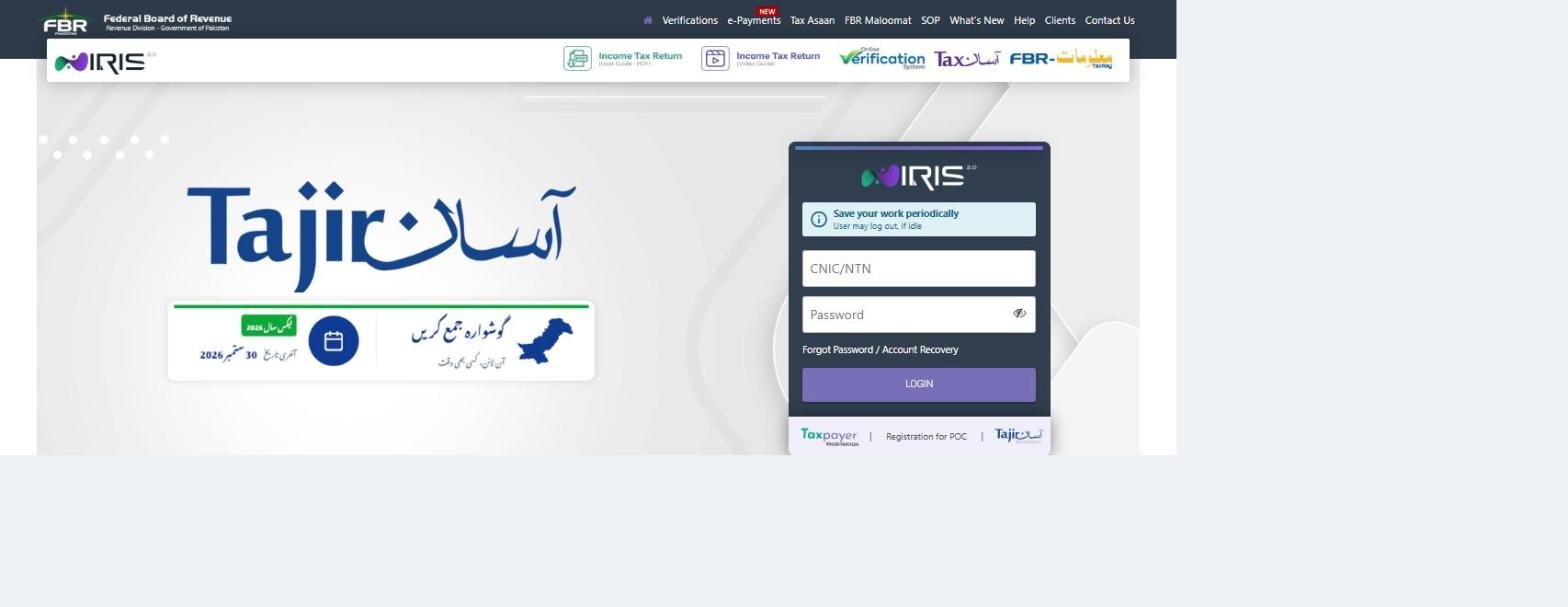
    FBR IRIS login dashboard for income tax return filing in Pakistan.How To File Income Tax Returns In Pakistan.

    Step 1: Login to IRIS Portal

    To start filing:

    • Open IRIS system
    • Enter CNIC or NTN
    • Enter password
    • Complete CAPTCHA

    After login, your taxpayer dashboard appears.

    Logging into IRIS FBR tax portal in Pakistan step by step Logging into IRIS FBR tax portal in Pakistan step by step   How to File Income Tax Returns in Pakistan Online (IRIS Step-by-Step Guide 2026)


    Step 2: Open Income Tax Return Form

    Inside dashboard:

    • Go to “Declaration”
    • Click “Income Tax Return”
    • Select tax year
    • Open draft return

    This form contains all income sections.

    Step 3: Enter Income Details

    You must enter all income sources:

    • Salary income
    • Business income
    • Bank profit
    • Freelancing income
    • Withholding tax details

    IRIS automatically matches data with FBR records.

    Income sources for tax return filing in Pakistan IRIS system
    Income sources for tax return filing in Pakistan IRIS system  How to File Income Tax Returns in Pakistan

    How to File Income Tax Returns in Pakistan Online (IRIS Step-by-Step Guide 2026)


    Step 4: Wealth Statement (If Required)

    Some taxpayers must also complete wealth declaration.

    It includes:

    • Property details
    • Cash in hand
    • Bank balances
    • Vehicles
    • Loans and liabilities

    This step is important for high-income filers.

    Wealth statement assets required for income tax return filing in Pakistan
    Wealth statement assets required for income tax return filing in Pakistan


    Step 5: Submit Income Tax Return

    Before submission:

    • Review all entries
    • Check tax payable/refund
    • Verify withholding tax
    • Click submit

    IRIS generates an acknowledgment receipt after submission.

    Income tax return successfully submitted in FBR IRIS Pakistan
    Income tax return successfully submitted in FBR IRIS Pakistan


    Common Mistakes in Tax Filing

    Many users face issues due to:

    • Wrong income reporting
    • Missing bank profit details
    • Ignoring withholding tax
    • Submitting without review
    • Using wrong tax year

    These mistakes often lead to notices from FBR.


    Practical Tips for Accurate Filing

    • Keep salary slips ready
    • Download tax deduction certificates
    • Match income with bank statements
    • Always review before submission
    • File before deadline

    Income tax returns in Pakistan are filed through the official IRIS system managed by the Federal Board of Revenue (FBR).


    FAQ Section

    How do I file income tax return in Pakistan online?

    You can file it through IRIS portal of FBR by logging in and submitting your return form.

    Is IRIS compulsory for tax filing?

    Yes, all income tax returns in Pakistan are filed through IRIS.

    Can I file tax return without help?

    Yes, but accuracy is important to avoid FBR notices.

    What happens after submission?

    You receive an official acknowledgment receipt from IRIS.

    This topic is part of a complete guide on Income Tax Return

    Income Tax Return Filing Services in Pakistan | Tax Consultant in Islamabad, Karachi & Lahore


  • Complete Documents Required for SECP Company Registration in Pakistan (2026)
    Complete Documents Required for SECP Company Registration in Pakistan (2026)

    Documents Required for SECP Company Registration are the first thing you must prepare before starting the company incorporation process in Pakistan.

    If your documents are incomplete or incorrect, SECP may reject or delay your application.

    This guide explains only the required documents so you can prepare everything before filing your application.


    Documents Required for SECP Company Registration in Pakistan

    The exact requirements may vary depending on the company type. Most private limited companies and single-member companies require the following information and documents.

    Copies of CNIC or Passport

    All directors, shareholders, and the chief executive must provide valid identification.

    Pakistani citizens normally submit copies of their CNIC, while foreign nationals provide passport details.

    Proposed Company Name

    Applicants must choose a company name that complies with SECP regulations.

    It is advisable to prepare two or three alternatives in case the preferred name is unavailable.

    Contact Information

    SECP requires:

    • Mobile numbers
    • Email addresses
    • Residential addresses

    Registered Office Address

    Every company must have a registered office address in Pakistan.

    This address becomes the official location for receiving notices and correspondence.

    Documents Required for SECP Company Registration
    Documents Required for SECP Company Registration

    Information Required From Directors and Shareholders

    Apart from identification documents, SECP asks for details such as:

    • Father’s or spouse’s name
    • Occupation
    • Nationality
    • Number of shares held
    • Percentage of ownership

    Providing accurate information helps avoid delays in processing.


    Documents Required for SECP Company Registration
    Documents Required for SECP Company Registration

    Additional Documents for Certain Companies

    Some businesses may need extra documents.

    Single Member Companies (SMC)

    Single-member companies require nominee information and consent from the nominee.

    Foreign Shareholders or Directors

    Foreign nationals may need:

    • Passport copies
    • Residential address details
    • Additional declarations where applicable

    Regulated Businesses

    Companies operating in certain sectors may require approvals or No Objection Certificates from relevant authorities.

    Documents Required for SECP Company Registration
    Documents Required for SECP Company Registration


    Common Mistakes to Avoid

    Many applications face delays because of simple errors.

    Avoid these common mistakes:

    • Using expired CNICs.
    • Entering names differently from official records.
    • Providing incorrect email addresses.
    • Choosing a company name that violates SECP naming guidelines.
    • Submitting incomplete shareholder information.

    Checking everything before filing can save time and prevent objections.


    Documents Required for SECP Company Registration
    Documents Required for SECP Company Registration

    FAQ Section

    What is SECP in Pakistan?

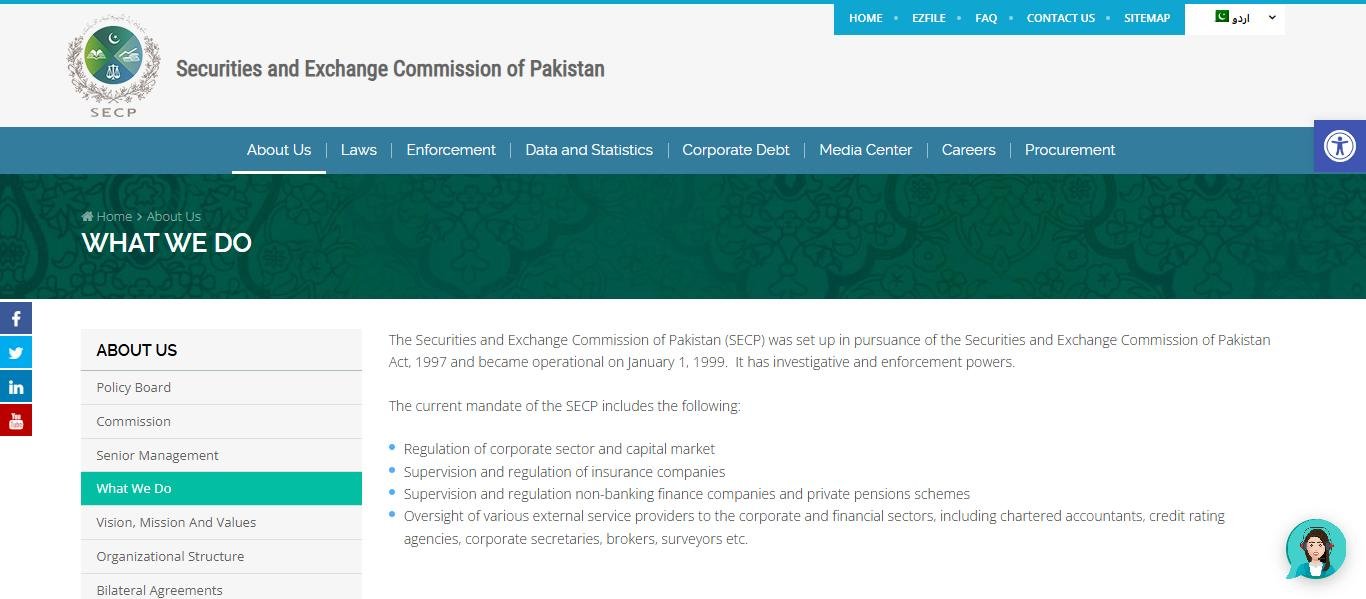
    SECP (Securities and Exchange Commission of Pakistan) is the regulatory authority for company registration and corporate compliance.

    Where can I register a company in Pakistan?

    You can register a company through the official SECP eServices portal: https://eservices.secp.gov.pk

    Is CNIC required for company registration?

    Yes, CNIC is required for all Pakistani directors and shareholders.

    Can foreigners register a company in Pakistan?

    Yes, foreigners can register companies using passport details and required documentation.


    Internal Linking Section

    This topic is part of a complete guide on SECP Company Registration

    https://taxaccountant.pk/secp-company-registration/


  • Excise Duty-2025

    Federal Excise Duty (FED) for 2025

    Pictured:

    A Pakistani businessman looking over excise duty paperwork while using a computer and tax forms
    ALT Text: “Excise duty calculation and compliance in Pakistan – professional tax consultation”

    In Pakistan, excise duty is a very important government tax that affects businesses that make things, bring things into the country, and provide services. Businesses that want to operate in Pakistan’s constantly changing economy need to know about this tax and its effects, rates, and rules for following them.

    What is duty on goods?

    Excise duty, which is often just called Federal Excise Duty (FED) in Pakistan https://fbr.gov.pk/federal-excise-duty-basics/, is a big part of the country’s tax system. As a seasoned tax expert who has helped countless companies comply with excise duty rules over the last ten years, I can say that any business in Pakistan’s manufacturing or import sectors needs to understand this tax.

    Federal excise duty concept illustration for Pakistani businesses

    Excise duty is an indirect tax that is charged on certain goods and services that are made, produced, or brought into Pakistan. Excise duty is collected at the point of manufacture or import, which makes it a very important factor for businesses in these areas. This is different from sales tax, which is usually passed on to the final customer.

    Know What? The Federal Excise Act, 2005, which replaced the Central Excise Act, 1944, says that the Federal Board of Revenue (FBR) is in charge of collecting excise tax. The system for collecting taxes got a lot better with this update.

     These are the main goals of Pakistan’s tax duty:

    Bringing in money:

    Making a big difference in how much money the federal government gets
    Controlling the consumption of some things that are seen as harmful or expensive is an example of economic regulation.

    Industrial policy:

    using smart tax strategies to help domestic businesses

    Social Goals:

    Getting people to stop using tobacco, alcohol, and other harmful goods
    What Are the Different Types of Excise Duty in Pakistan?
    Pakistan’s excise duty system is made up of different types of taxes, each of which is meant to reach different social and economic goals. As a tax consultant with a lot of experience, I’ve seen that businesses often have trouble figuring out which group fits their operations.

     1. Excise duty based on value

    This kind is worked out as a share of the things’ value. If the ad valorem rate is 10% and the value of the good is PKR 100,000, then the excise duty would be PKR 10,000. This method is often used for expensive items and things whose values change a lot.

    2. Certain Excise Duty

    Based on amount, weight, or volume instead of worth when figuring out. For instance, cigarettes might be charged at PKR 50 per pack, no matter how much the brand costs. This method guarantees consistent revenue collection and works best for goods that are all the same.

    3. VAT and Excise Duty

    A mix of ad valorem and specific tasks that gives tax collectors more freedom while still making sure they get minimum amounts of money.

    Excise duty collection by type, shown in a chart (2024)

    • 60% based on value
    • To be exact: 30%
    • Mixed: 10%

    Federal Board of Revenue Annual Report 2024 is the source.

    Current Rates for Excise Duty in 2025

    Pakistan’s excise duty rates can be changed every year through the government budget. As we move into 2025, there have been a number of big changes that businesses need to be aware of in order to stay compliant.

    Type of Product Method of Calculating Excise Duty Rate Start Date

    • Local cigarettes cost PKR 4,500 for every 1000 sticks. Date: July 1, 2024
    • Cars and trucks (1800cc+) 7.5% ad valorem July 1, 2024
    • PKR 2 per kg for cement on July 1, 2024
    • 13% ad valorem for aerated drinks July 1, 2024
    • Services for telecommunications: 19.5% ad valorem July 1, 2024
    • 16% ad valorem for banking services on July 1, 2024

    Note: These rates could change if there are additional financial acts or changes to the budget. Before doing any math, you should always check the official website of the Federal Board of Revenue to see what the current rates are.

    Things and services that are taxed

    It is important for businesses to know which things and services are subject to excise duty. During my many years of experience, I’ve seen that many businesses don’t follow the rules because they didn’t know their goods or services were subject to tax duty.

    Picture: A collage of different goods that are subject to excise charge, such as cars, cigarettes, drinks, and cell phones

    Sector of Manufacturing

    • There are cigarettes, cigars, and other tobacco products on the market.
    • Drinks: energy drinks, aerated drinks, and juices
    • Cement: All kinds of cement making
    • Two kinds of sugar: refined and raw
    • Some types of steel goods are iron and steel.
    • Cosmetics: high-end goods for beauty and personal care

    Import Business

    • Cars, motorcycles, and industrial trucks are type of motor vehicles.
    • Electronics include cell phones, air conditioners, and fridges.
    • High-end items like jewelry, watches, and other high-end items
    • items Made from Oil: Some items made from refined oil

    Sector of Service

    • Services for communicating: cell phones and the internet
    • Banking Services: Performing certain banking activities
    • Life and general insurance are offered by this company.
    • Travel by air: trips within and between countries

    Key Points for Compliance:

    People who make or bring in excisable things must register with the government.
    If a service provider’s regular sales go over certain limits, they have to register.
    All people who pay excise tax must keep accurate records and fill out the right paperwork.
    No matter how busy a business is, it needs to file reports on a regular basis.

    Tax Breaks and Exemptions

    Pakistan’s excise duty system is made up of different exemptions and concessions that are meant to help certain businesses, boost exports, and reach social goals. Businesses that are qualified can save a lot of money by learning about these exemptions.

    Picture: Pakistani goods for sale with a “Tax Exempt” stamp and the country’s flag on them

    Industries Focused on Exports

    Goods made for sale are exempt from one of the most important rules. The goal of this policy is to make Pakistan more competitive on foreign markets by making it easier for exporters to cover costs.

    Documentation is needed for the following exemption categories and conditions:

    • Complete exemption for exporting goods; goods must be sent abroad within 90 days; export papers and shipping bills
    • Small-scale businesses have lower rates if they make less than 10 million rupees a year and have their books and registration license audited.
    • Full immunity for agricultural inputs; direct use in agriculture; end-use certificate
    • Medical equipment:full exemption; only life-saving equipment must be approved by the health minister

    Zones for special economic use

    Businesses that operate in Special Economic Zones get big breaks on excise duties as part of Pakistan’s plan to grow its industries.

    Tip for professionals:

    Before claiming exemptions, you should always talk to an experienced tax advisor. If you file incorrect tax returns, you may have to pay fines and interest that are much higher than your original tax debt.

    This is a step-by-step guide on how to figure out excise duty.

    For compliance and cash flow management, it is very important to figure out excise fee correctly. Let me show you how to do the calculations using real-life cases that I use all the time in my consulting work.

    Picture: A calculator with Pakistani rupee notes and a paper for figuring out excise duty

    How to Figure Out Ad Valorem

    Excise duty is calculated by multiplying the taxable value by the rate.

    Example 1: Bringing in a car

    What would happen if you brought in a car that was worth PKR 2,000,000?

    Rate of Excise: 7.5%
    The answer is PKR 150,000, which is (2,000,000 x 7.5).
    PKR 2,000,000 plus PKR 150,000 equals PKR 2,150,000.
    How to Figure Out Specific Duty
    Excise duty equals quantity times a specific rate.

    Second example: Making cement

    Making 10,000 kg of cement is the scenario.
    The tax rate is PKR 2 per kg.
    10,000 times 2 equals 20,000 PKR.
    Impact per unit: PKR 2 per kg extra cost
    How to Figure Out Service Tax
    Usually, the gross amount charged to customers is used to figure out excise fee on services.

    Chart: How Excise Duty Affects the Prices of Goods

    chart

    Filing Procedures and Rules for Following Them

    Excise tax compliance depends on following the right filing steps. I’ve helped hundreds of businesses file their excise duty returns, and I can tell you that the best way to avoid problems with tax authorities is to be organized and pay close attention to the little things.

    Picture: A Pakistani businessman fills out an excise tax return online on a computer, and the FBR portal can be seen.

    Steps for Registration

    Businesses must register with the Federal Board of Revenue before they can start doing business. As part of the registering process,

    • Sending in an application: Fill out Form FED-01 and include all necessary documents.
    • Verification of Documents: Send information about your business license, NTN, and location.
    • Physical Inspection: FBR officials may check out the facilities.
    • Certificate Giving: Get an excise tax registration certificate.
    • Filing a return every month

    People who are registered must file monthly forms by the 15th of the following month. Parts of the process are:

    Monthly Checklist for Filing:

    • Figure out how much excise fee you owe for the month.
    • Make thorough notes of production and imports.
    • Use the FBR online site to file your return.
    • Send money through certain banks.
    • Keep copies of all tax returns you make.
    • Needs for Keeping Records

    Not only is it the law to keep good notes, it’s also important for running a business. Records that are needed include:

    output Records:

    Daily reports on output with numbers and amounts

    Sales Records:

    Detailed sales records that figure out excise duty

    Purchase Records:

    Documents showing the buying of raw materials and importing them
    Stock records show when stock holdings are opened and closed.
    Cashiers checks and payment receipts are examples of payment records.

    Alert for Compliance:

    Records must be kept for at least five years and should be easy for FBR https://fbr.gov.pk/ officials to look at. Digital records are fine, but they need to be backed up safely.

    Penalties for Not Following the Rules

    Businesses need to know how the penalties work in order to understand how important it is to comply on time. Different types of breaches are punished in different ways by the Federal Excise Act, 2005.

    penalties-and-warnings

    Type of Violation Amount of the Penalty Other Effects Method of Recovery

    • Late filing of returns: PKR 10,000 or 5% of the tax due plus interest at the rate set by the government.
    • Non-Payment of Tax: 100% of the tax amount; possibly criminal prosecution; attachment of assets
    • For failing to register, you could face PKR 50,000 to PKR 500,000 in fines and court processes.
    • PKR 25,000 to PKR 100,000 for wrong records; detailed audit; administrative action

    Figuring Out Interest

    Interest is charged on late payments at the rate set by the Federal Board of Revenue, which is currently 14% per year. Interest is added from the date the payment was due until the date it was actually made.

    Professional Advice:

    If you find mistakes in past forms, it’s better to make the changes yourself instead of waiting for FBR to find them. When someone voluntarily tells, the punishments are often lessened.

    Excise Duty 2025:

    New Changes and Updates
    Pakistan’s excise fee system is always changing because the country’s economy and policy goals are always changing. There have been a lot of big changes that businesses need to be aware of as we move through 2025.

    Budget-2024-25

    Tax on Digital Services

    Putting excise tax on digital services offered by companies that are not based in the country was a big change in 2024. What this does is

    • Services for online ads
    • Digital sites for streaming
    • Marketplace services for online shopping
    • Services for cloud computers

    Adding the Environmental Levy

    Environmental concerns have been built into the government’s tax duty system, with higher rates for products that are bad for the environment and lower rates for products that are better for the environment.

    Automating and digitizing tasks

    The FBR has started a number of digital projects to make collecting excise charge easier:

    Highlights of the digital transformation:

    • A way for new taxpayers to sign up online
    • Tax report and payment app for phones
    • Tracking of sales and production in real time
    • Systems that automatically evaluate risks
    • How to do a digital check and inspection

    Stay up to date:

    Sign up for FBR notifications and check the official FBR website often for the most recent information on excise duty rates and processes.

    Case studies and real-life cases

    Businesses can better understand the effects of tax duty by looking at examples from real life. From my work experience, here are some case studies that show common problems and how to solve them.

    tax Case Study

    Case Study 1:

    A textile company that starts making clothes
    A textile company wanted to start making ready-to-wear clothes, but they were worried about the effects on tax duty.

    Textile manufacturing is exempt from some taxes, but ready-made clothes may be subject to excise duty based on their value and type.

    Solution:

    We planned the expansion so that we could keep the production lines separate and made sure we kept good records so we could tell the difference between items that were tax-free and those that were.

    The client was able to grow while staying in compliance and lowering their tax burden.

    Case Study 2:

    An audit is coming for an import business
    An electronics importer got a notice from FBR that they needed to do an audit on how they calculated excise tax on imported cell phones.

    The client was underpaying because they were figuring out excise tax based on the CIF value instead of the correct assessable value.

    Resolution:

    We sent a full response with correct calculations, made voluntary corrections for past periods, and put in place the right processes for future imports.

    As a result, penalties were kept to a minimum by voluntary disclosure, and the client set up strong processes for compliance.

    • Chart: Common Problems with Paying Excise Duty
    • Calculations Wrong: 35%
    • 25% if you file late
    • 20% of people keep bad records.
    • Problems with registration: 15%
    • Other: 5%

    After looking at more than 500 client cases from 2020 to 2024,

    How to Make Sure You Pay Your Excise Duty

    I’ve spent years helping businesses understand excise tax rules, and now I’ve put together a list of useful tips that can save them time, money, and trouble with the rules.

    Picture: A Pakistani tax expert talking to business owners and giving them a compliance checklist

    Strategies for proactive compliance

    Checklist for Monthly Compliance:

    • Every month on the 5th, look over the production and sales statistics.
    • Use current rates to figure out your excise tax liability.
    • To escape problems at the last minute, prepare and file your returns by the 10th.
    • Make payments right away after filing.
    • Match up the books with the filed returns
    • Change the rate plans for any government notices

    Answers in Technology

    Implementing the right technology can make compliance much more efficient:

    Integration with ERP:

    Link the estimates of excise duty to your main accounting system

    Automated Alerts:

    Set up alerts to tell you of due dates and rate changes

    Digital Documentation:

    Keep electronic records safe by using the right backup methods.

    Real-time Monitoring:

    Always keep an eye on sales and production data

    Dealing with Risk

    Find and reduce possible regulatory risks:

    Watch out for these high-risk areas:

    • Changes in how a product is classified change excise rates
    • Set limits for waivers for small businesses
    • Export paperwork needs and due dates
    • Transfer pricing and deals between companies
    • Joint ventures and how they affect taxes
    • Help for professionals

    Know when to get help from a professional:

    • Classifications of complex products
    • Operations in more than one place
    • Combinations of exports and imports
    • Things about audits and investigations
    • Appeals and getting rid of disagreements

    Getting Good at Paying Excise Duty in Pakistan

    To pay your excise duty in Pakistan, you need to know a lot about the rates, processes, and constant changes to the rules. As we’ve seen in this guide, compliance relies on things like correct registration, correct calculations, timely filing, and keeping detailed records.

    Picture: A successful Pakistani business team enjoying their tax compliance with official paperwork

    The most important things for companies that do business in Pakistan’s excise duty environment are:

    Important factors for success:

    • Keep up-to-date: Check FBR alerts and rate changes on a regular basis.
    • Stay Accurate: Make sure that numbers are correct and that the right paperwork is done.
    • Plan ahead: When planning your business, think about how excise fee might affect you.
    • Seek Expertise: For tough cases, talk to professionals.

    Adopt technology: use digital tools to make accountability easier.

    As Pakistan’s economy grows and tax policies change to fit new situations, excise duty will continue to change too. Companies that set up strong compliance systems now will be better prepared for future changes and be able to focus on their main tasks.

    Remember that paying excise tax isn’t just about staying out of trouble—it’s also about helping Pakistan’s economy grow and keeping your business competitive. Businesses can achieve both compliance excellence and operating efficiency by following the rules and strategies laid out in this detailed guide.

    Need Help from a Professional? If you need help with complicated excise duty issues or a one-on-one consultation, you might want to hire qualified tax professionals who can give you answers that are perfect for your business. For the most up-to-date information and legal rules, go to the website of the Federal Board of Revenue.

    About the Writer

    This complete guide was made by the experts at https://taxaccountant.pk/, which is Pakistan’s top tax consulting company. Our team has helped thousands of businesses meet excise duty requirements and improve their tax positions for more than ten years. We know a lot about Pakistani tax law and how to follow it.

    We know a lot about every part of the Pakistani economy, from making things and importing things to running services and digital companies. To make sure our clients get the most accurate and up-to-date information, we keep up with all changes to the rules and keep open lines of contact with the tax authorities.

    Get in touch with us for custom excise tax advice and compliance services that fit the needs of your business.

  • Service Tax in pakistan

    Service Tax in pakistan

    Service Tax in Pakistan:

    What You Need to Know About the Service Tax in Pakistan

    Service tax has become an important part of Pakistan’s tax system, which shows how the country’s economy is shifting towards being more service-based. Businesses in a wide range of service industries need to understand their service tax obligations as the services sector continues to grow its share of GDP.

    In Pakistan, the service tax system is run by both the federal government and the provinces. This makes it difficult to understand and navigate. Service providers need to know what they need to do to meet the requirements of many tax authorities while also keeping up with changing rules that affect their pricing and operational costs.

    In the past few years, the growth of e-commerce and the digitisation of services have added new aspects to the taxation of services. From traditional professional services to modern digital platforms, the scope of service tax keeps growing. For a business to be successful, it is essential to fully understand these rules.

    This guide gives service providers in Pakistan a lot of information about their service tax system. This helps them understand their responsibilities, pay their taxes as efficiently as possible, and stay in line with the rules. Whether you’re a new company that offers digital services or an established one that offers professional consulting, it’s important to know how service taxes affect your business.

    How to Understand the Service Tax Framework

    Pakistan has a dual taxation system, which means that the federal government and the provincial governments are both in charge of different types of services. This structure reflects the constitutional distribution of powers between federal and provincial authorities.

    Federal Service Tax Authority

    The Federal Board of Revenue (FBR) https://fbr.gov.pk/administers service tax on services that fall under federal jurisdiction, including telecommunications, banking, insurance, and international services. The federal service tax rates and procedures are the same all over the country. This makes things easier for businesses that do business in more than one province.

    Service tax systems in each province

    Each province maintains its own service tax authority with jurisdiction over locally provided services. Different provinces may have different rules and fees, which can make it hard for businesses that operate in more than one province to follow the rules. Punjab, Sindh, Khyber Pakhtunkhwa, and Balochistan are the four provinces, and each has its own rules about service taxes.

    Mechanisms for Coordination

    There are ways for governments to work together to stop double taxation and settle disputes over who has jurisdiction. However, businesses must remain vigilant about overlapping jurisdictions and ensure proper classification of their services to avoid compliance issues.

    Laws and Rules

    At both the federal and provincial levels, the service tax legal framework is made up of different ordinances, acts, and rules. The Sales Tax Act of 1990 (for federal services) and the provincial service tax acts are important pieces of legislation. There are also many statutory regulatory orders (SROs) that give detailed instructions on how to implement the law.

    Current Service Tax Rates and Structure

    Service tax rates in Pakistan vary significantly based on the type of service, jurisdiction, and specific circumstances of the service provider. It’s important to understand these differences in order to make accurate decisions about taxes and prices.

    Rates for the federal service tax

    Service Category Tax Rate Applicable Threshold

    • Telecommunications 19.5% All services
    • Services for banks: 17% Different types of services
    • Insurance Services 16% Based on premiums
    • 16% More than 3 million rupees a year in professional services
    • IT services for exporting 0% Focused on exporting
    • 16% Above the threshold for advertising services

    Rates for the provincial service tax

    Punjab Service Tax

    • Professional services: 16%
    • 16% for hotel and restaurant services
    • 16% for event management
    • Beauty and wellness services: 16%
    • Service Tax for Sindh
    • Legal services: 15%
    • 16% for medical services
    • Educational services: Various rates
    • Entertainment services: 19.5%
    • Khyber Pakhtunkhwa Service Tax
    • Construction services: 16%
    • Transport services: 17%
    • Professional consultancy: 16%
    • Technical services: 16%
    • Service Tax in Balochistan
    • Professional services: 16%
    • Technical services: 16%
    • 16% for consulting services
    • Other services: Various rates

    Rate Calculation Methods

    Service tax calculation methods vary depending on the service type and jurisdiction. Common methods include:

    Ad Valorem Method:

    Tax calculated as a percentage of service value

    Specific Rate Method:

    Fixed amount per unit of service

    Composite Method:

    Combination of percentage and fixed components

    These are the services that are subject to service tax:

    The scope of services subject to service tax has expanded significantly over the years, encompassing traditional professional services and modern digital offerings. Understanding which services are taxable helps businesses determine their compliance obligations.

    Services for professionals

    Legal Services including litigation, legal advice, documentation, and corporate legal services are subject to service tax in most jurisdictions. Law firms and individual lawyers who work with clients over certain amounts must register and collect tax from those clients.

    Medical Services provided by private practitioners, clinics, and hospitals fall under provincial service tax jurisdiction. However, certain medical services may qualify for exemptions based on their nature and target beneficiaries.

    Depending on their scope and client base, engineering and technical services like design, consulting, project management, and technical advice may be taxed at the federal or provincial level.

    Accounting and Audit Services provided by chartered accountants, audit firms, and financial consultants are subject to service tax. This includes bookkeeping, tax advisory, financial planning, and audit services.

    Business Services

    Advertising and Marketing Services including digital marketing, media planning, creative services, and promotional activities are subject to service tax. The growth of digital advertising has expanded the scope of taxable services in this category.

    Software development, system integration, data processing, and IT consulting are all examples of information technology services. Export-oriented IT services often qualify for zero-rating or exemptions to promote the sector’s growth.

    There is a federal service tax on telecommunications services like cell phones, the internet, and data plans. The high tax rates on telecommunications reflect both revenue generation needs and the sector’s substantial profit margins.

    Services for money

    Banking Services including loans, deposits, foreign exchange, and advisory services are subject to federal service tax. Different banking products may have varying tax treatments based on their nature and target customers.

    Insurance Services covering life, health, property, and commercial insurance are taxable under federal jurisdiction. Premium-based taxation methods are commonly used for insurance service tax calculation.

    Investment and Securities Services including brokerage, portfolio management, and investment advisory services fall under federal service tax jurisdiction with specific provisions for different types of financial instruments.

    Service Tax Registration Requirements

    Service tax registration is mandatory for service providers meeting specified criteria. Understanding registration requirements helps businesses ensure timely compliance and avoid penalties for late registration.

    Registration Thresholds

    Federal Services: Registration is generally required when annual service provision exceeds Rs. 3 million, though some services have lower thresholds or mandatory registration regardless of turnover.

    Provincial Services: Thresholds vary by province and service type, typically ranging from Rs. 2 million to Rs. 5 million annually. Some provinces require registration for all commercial service providers regardless of turnover.

    Registration Process

    Documentation Requirements:

    • National Tax Number (NTN)
    • Business registration certificates
    • Bank account details
    • Business premises verification
    • Describe and classify the service

    Application Procedures:

    • Online application through respective tax authority portals
    • Physical verification of business premises
    • Document submission and verification
    • Registration certificate issuance

    Multiple Registrations

    Businesses providing services under different jurisdictions may require multiple registrations. For example, a consultancy firm providing both federal and provincial services must register with relevant authorities and maintain separate compliance for each jurisdiction.

    Registration Maintenance

    Registered service providers must maintain their registration status through:

    • Regular return filing
    • Timely tax payments
    • Updated business information
    • Compliance with audit requirements

    How to File and Pay Your Service Tax

    Service tax compliance involves regular filing of returns and timely payment of tax liabilities. Understanding these procedures helps maintain smooth business operations while meeting regulatory requirements.

    How Often You File

    Monthly Returns:

    Most service providers must file monthly returns by the 15th of the following month. These returnsinclude details of services provided, tax collected, and payments made.

    Quarterly Returns: Some smaller service providers or certain types of services may be able to file every three months, which lowers the compliance burden while keeping the efficiency of collecting revenue high.

    Annual Returns:

    Comprehensive annual returns provide detailed information about the service provider’s activities, tax payments, and compliance status throughout the tax year.

    How to File a Tax Return

    Online Filing Systems: Most places have put in place online filing systems that make sending in tax returns easier. These systems do calculations, check for errors, and let you know right away when your tax return has been filed.

    Required Information:

    • Information and categories about the service
    • Client information and service values
    • Tax calculations and collections
    • Input tax claims (if they apply)
    • Specifics of payments and balancing

    How to Make Payments

    Electronic Payment Methods:

    Tax payments must typically be made through designated banks or online payment systems. Electronic payment methods provide immediate confirmation and reduce processing delays.

    Payment Timing: Tax payments are generally due with return filing, though some jurisdictions allow extended payment periods for specific circumstances or service categories.

    Reconciliation Requirements: Service providers must maintain detailed records reconciling tax collections with payments made to authorities, ensuring accuracy and facilitating audit processes.

    Exemptions and Zero-Rated Services

    The service tax system includes various exemptions and zero-rating provisions designed to support specific sectors, promote exports, or address social policy objectives. Understanding these provisions helps optimize tax efficiency while ensuring compliance.

    Export Services

    IT Services Export: Information technology services provided to foreign clients are typically zero-rated or exempt from service tax to promote the sector’s growth and enhance export competitiveness.

    Professional Services Export: Legal, accounting, engineering, and other professional services provided to overseas clients may qualify for zero-rating, subject to documentation requirements proving export status.

    Telecommunications Export:

    Services related to international telecommunications and services given to foreign telecommunications operators are often taxed more favourably.

    Exemptions for the Social Sector

    Healthcare Services:

    Basic healthcare services, particularly those provided by public sector institutions or targeting low-income populations, may qualify for exemptions or reduced rates.

    Educational Services:

    Educational institutions, particularly those serving public interest or providing basic education, often receive exemptions or preferential tax treatment.

    Religious Services:

    Services provided by religious institutions for religious purposes typically qualify for exemptions across all jurisdictions.

    Small Business Exemptions

    Exemptions Based on Turnover:

    Service providers with less than a certain amount of turnover may not have to register for or pay service tax at all.

    Sector-Specific Exemptions:

    Certain service sectors may receive temporary or permanent exemptions to support their development or address specific economic policy objectives.

    Conditional Exemptions

    Many exemptions are conditional, requiring service providers to meet specific criteria and maintain proper documentation. Common conditions include:

    • Minimum export percentages
    • Service quality standards
    • Beneficiary income limits
    • Geographic restrictions
    • Time-bound validity

    What Makes Service Tax Different from Sales Tax?

    Knowing the difference between sales tax and service tax is important for businesses that may have to pay both types of taxes. These taxes have different legal frameworks, administration systems, and compliance requirements.

    Scope and Coverage

    Service Tax applies to the provision of services, including professional, technical, commercial, and digital services. The tax is levied on the service provider who typically passes the cost to the service recipient.

    Sales Tax applies to the sale of goods and certain specified services. A value-added tax (VAT) system is in place, and business-to-business transactions can get input tax credits.

    Differences in Administration

    Service tax and sales tax

    Administration:

    Federal or Provincial Mainly Federal

    Registration Fee:

    Rs. 3 million (federal) or less, depending on where you live.

    How often you file:

    monthly, quarterly, or annually

    Input Tax Credit:

    Limited Availability Full System

    Audit Procedures Standardised federal procedures for each jurisdiction

    Effects on Compliance

    Documentation Needed:

    For service taxes, compliance paperwork is usually less complicated than for sales taxes, which need thorough input-output reconciliations and credit claims.

    Integration of Systems:

    Companies that have to pay both taxes must keep systems that work together to sort transactions correctly and make sure that each type of transaction gets the right tax treatment.

    Things to think about when doing an audit: sales tax audits focus on input tax credit claims and transaction documentation, while service tax audits look at how services are classified and how much they are worth.

    Service providers must follow certain rules in order to be compliant.
    Service tax compliance is more than just registering and filing returns. It also includes keeping records, providing proof, and following operational procedures that ensure ongoing regulatory compliance.

    Needs for Keeping Records

    Service Documentation:

    For certain amounts of time, contracts, invoices, delivery confirmations, and payment receipts must be kept as detailed records of all services provided.

    Tax Calculation Records:

    For audit purposes, you must keep records of all the paperwork that supports your tax calculations, such as rate applications, exemption claims, and adjustment calculations.

    Information about clients: Full client databases must be kept and updated regularly. These databases should include tax registration information, service classifications, and transaction histories.

    Standards for invoices and paperwork

    Invoice Requirements:

    • Service tax bills need to have certain details on them, like
    • Details on how to register as a service provider
    • Information about the client’s identity
    • Describe and classify the service
    • How to figure out taxes

    Conditions and terms of payment

    Electronic Documentation:

    Many places now accept or require electronic documentation, which cuts down on paperwork while keeping audit trails and making information easy to find.

    Control Systems Inside

    Tax Compliance Procedures:

    Businesses need to set up internal procedures that make sure all of their tax obligations are met on time and that everyone is treated the same when it comes to taxes.

    Review and Approval Processes:

    Systems with more than one level of review help keep things free of mistakes and up to par, which is especially important for companies that offer a lot of different services.

    Training and Awareness:

    Teaching employees about service taxes on a regular basis makes sure that the rules are always followed and lowers the risk of not following them.

    There will be a service tax audit and assessment.

    Service tax audits are an important part of the tax system because they make sure that people are following the rules and find places where money might be going missing. Knowing how audits work helps businesses get ready and keep problems to a minimum.

    Criteria for Audit Selection

    Risk-Based Selection:

    • Tax authorities use risk assessment models that take into account things like
    • Risk profiles for each industry
    • Patterns of compliance in the past
    • The number and complexity of transactions
    • Cross-matching with data from other sources

    Random Selection:

    Some audits are conducted on a random basis to maintain overall compliance discipline across all service providers.

    Complaint-Based Audits:

    Audits can be started when competitors, clients, or other stakeholders complain about possible non-compliance.

    How and what to do for an audit

    Notification of Audit:

    Service providers are given formal notices of audits that explain what the audit is looking at, what paperwork is needed, and when compliance is due.

    Review of Documentation:

    To make sure compliance is correct, auditors look at business records, tax returns, invoices, contracts, and other supporting documents.

    Physical Verification:

    Visits to the business location may be made to check how it runs, how services are provided, and how records are kept.

    How Assessments Are Made:

    Tax authorities may issue assessments for extra tax, penalties, or changes to returns that have already been filed based on the results of an audit.

    Strategies for Audit Defence

    Preparation and Documentation:

    Maintaining comprehensive, well-organized records significantly improves audit outcomes and reduces potential adjustments.

    Professional Representation:

    Hiring qualified tax professionals to help with audits helps make sure that the facts are presented correctly and that taxpayer rights are protected.

    Dispute Resolution:

    Knowing the different ways to settle disagreements, like appeals and other options, makes it easier to handle disagreements during an audit.

    Common Problems with the Service Tax and How to Fix Them

    When it comes to paying service taxes, service providers often run into certain problems. Knowing about these common problems and how to fix them can help keep things running smoothly.

    Problems with Service Classification

    Multiple Service Categories:

    Businesses that offer a wide range of services may find it hard to classify them correctly, especially if those services fall into more than one tax category that has different rates or rules.

    Solution:

    Make detailed matrices for classifying services and get professional help for tough cases. For auditing purposes, keep the paperwork that backs up your classification decisions.

    Problems with Jurisdiction

    Choosing between federal and provincial services: It can be hard to tell which services are federal or provincial, especially when they have parts of both.

    Solution:

    Compare the features of the service to the requirements of the jurisdiction and ask for more information from the right authorities if you’re not sure what to do. For complicated cases, you might want to get rulings ahead of time.

    Problems with Input Tax Credits

    Not Many Credit Options:

    Unlike sales taxes, service taxes don’t always offer many input tax credit options, which makes taxes more expensive.

    Solution:

    Find out what kinds of credit are available and set up your business so that you can make as many legitimate credit claims as possible. Think about ways to deliver services that make the best use of taxes.

    Problems with integrating technology

    System Compatibility:

    It can be hard to make sure that service tax compliance is handled by existing business systems, especially for companies that still use old systems.

    Solution: Spend money on compatible software or system upgrades that make paying taxes easier. Cloud-based solutions can be expanded and updated easily.

    Taxes on digital services and online shopping

    Service tax administration has become more difficult as digital services and e-commerce have grown quickly. For businesses that work in the digital economy, it’s important to understand these changes.

    Types of Digital Services

    Software as a Service (SaaS):

    Cloud-based software services are subject to service tax, with specific provisions for cross-border transactions and local service delivery.

    Digital Marketing Services:

    Online advertising, social media marketing, and digital promotional services fall under service tax jurisdiction with evolving compliance requirements.

    E-Commerce Platform Services:

    Marketplace services, payment processing, and logistics support services provided by e-commerce platforms are subject to various service tax treatments.

    Cross-Border Digital Services

    International Service Provision:

    Digital services provided to overseas clients may qualify for zero-rating or exemptions, subject to documentation requirements proving export status.

    Foreign Service Providers:

    International companies providing digital services to Pakistani clients may have service tax obligations, creating compliance challenges for both providers and recipients.

    Compliance Challenges

    Transaction Volume:

    High-volume, low-value digital transactions create compliance challenges requiring automated systems and streamlined procedures.

    Documentation Requirements:

    Digital service documentation must meet tax authority requirements while accommodating electronic business processes and customer expectations.

    Technology Integration:

    Digital service providers must integrate tax compliance with their technology platforms, ensuring accurate tax calculation and collection across all transactions.

    Provincial Service Tax Variations

    Each province in Pakistan maintains its own service tax system with distinct rates, procedures, and compliance requirements. Understanding these variations is essential for businesses operating across provincial boundaries.

    Service Tax System in Punjab

    Administration: The Punjab Revenue Authority (PRA) is in charge of the provincial service tax. Its main goals are to be efficient and make things easier for taxpayers.

    What’s important:

    • Full system for filing documents online
    • Risk-based audit selection
    • Streamlined registration procedures
    • Regular education programmes for taxpayers

    Major Types of Services:

    • Professional services (legal, medical, engineering)
    • Help with hotels and restaurants
    • Event management and entertainment
    • Beauty and wellness services

    Sindh Service Tax Framework

    Administration:

    The Sindh Revenue Board (SRB) https://www.srb.gos.pk/srb/ runs a high-tech tax system that focuses on integrating technology.

    Unique Characteristics:

    • Automated systems for testing
    • Adding electronic payment methods
    • Monitoring transactions in real time
    • Full services for taxpayers

    Coverage for Service:

    • Legal and professional services
    • Medical and healthcare services
    • Educational institution services
    • Entertainment and recreational services

    Khyber Pakhtunkhwa Service Tax

    Administration:

    Khyber Pakhtunkhwa Revenue Authority (KPRA) focuses on expanding the tax base while maintaining compliance quality.

    Key Characteristics:

    • Simplified registration procedures
    • Flexible payment options
    • Sector-specific compliance guidance
    • Regular stakeholder consultations

    Balochistan Service Tax System

    Administration:

    Balochistan Revenue Authority (BRA) emphasizes capacity building and system development to enhance tax administration effectiveness.

    Areas of Focus:

    • Building up infrastructure
    • Taxpayer education and awareness
    • System modernization
    • Making compliance easier

    Tips for Planning Your Service Taxes

    Effective service tax planning helps businesses optimize their tax efficiency while maintaining full compliance with applicable regulations. Strategic planning should be integrated with overall business planning for maximum effectiveness.

    Business Structure Optimization

    Service Delivery Models:

    Structuring service delivery to optimize tax treatment while meeting client requirements and maintaining service quality.

    Geographic Considerations:

    Leveraging provincial variations and special economic zones to minimize tax burden while complying with substance requirements.

    Technology Integration:

    Using technology to streamline compliance processes, reduce costs, and improve accuracy in tax calculations and reporting.

    Timing Strategies

    Service Recognition:

    Figuring out the best time to bill for and recognise services so that you don’t owe too much tax at different times.

    Payment Scheduling:

    Setting up payment terms so that they work with your cash flow needs and your tax obligations.

    Contract structuring is the process of making service contracts that get the best tax treatment while also protecting business interests and keeping client relationships.

    Exemption and Use of Incentives

    Export Promotion:

    Maximizing benefits from export-oriented service provisions and zero-rating opportunities.

    Sector Incentives:

    Taking advantage of sector-specific incentives and exemptions available for particular service categories or business activities.

    Threshold Management:

    Managing business activities to optimize threshold-based exemptions and preferential treatments.

    Service tax penalties for not paying them

    Service tax non-compliance carries significant financial and operational consequences that can severely impact business operations. Understanding penalty structures helps businesses prioritize compliance and avoid costly mistakes.

    Financial Penalties

    Late Filing Penalties:

    Penalties for late return filing typically range from fixed amounts to percentage-based calculations depending on the delay period and tax liability.

    Late Payment Penalties:

    Default surcharges on late tax payments compound over time, significantly increasing the cost of non-compliance.

    Under-Declaration Penalties:

    Additional taxes and penalties apply when audits reveal under-declared service tax liabilities, often including substantial penalty multipliers.

    Operational Consequences

    Registration Suspension:

    Persistent non-compliance may result in registration suspension, preventing legal service provision and business operations.

    Bank Account Restrictions:

    Tax authorities may make it hard for service providers who don’t follow the rules to use their bank accounts, which can have a big effect on a business’s cash flow.

    Problems with Business Licences:

    Not paying service taxes can cause problems with other business licences and government approvals, making it harder to run the business.

    How to Do Recovery

    Asset Attachment:

    Tax authorities have powers to attach business assets for recovery of outstanding tax liabilities and penalties.

    Third-Party Recovery:

    Clients and business partners may be included in the recovery process through notices and collection mechanisms sent by third parties.

    Legal Proceedings:

    Repeatedly failing to follow the rules could lead to legal proceedings, which could have criminal consequences for those who are responsible.

    Recent Developments in Service Tax

    The service tax landscape continues evolving with regular amendments, policy changes, and administrative improvements. Staying current with these developments is essential for maintaining compliance and optimizing business operations.

    Legislative Changes

    Rate Changes:

    Recently released budgets include new rates for a number of different types of services. These changes are necessary to meet policy goals and raise revenue.

    Scope Expansions:

    A lot of new types of services, mostly in the digital economy and new service sectors, are now subject to taxes.

    Improvements to the way things are done: made things easier to do and made it easier for small service providers and certain sectors to follow the rules.

    Technology Projects

    Digital integration means better online systems for filing, registering, and making payments across federal and provincial governments.

    Data Analytics:

    Using advanced data analytics to evaluate risks, choose audits, and keep an eye on compliance.

    Automation:

    Assessment procedures, refund processing, and regular compliance checks have become more automated.

    Policy Changes

    Harmonisation Efforts:

    Work is still being done to make service tax systems more consistent across provinces and make it easier for businesses that do business in more than one province to follow the rules.

    International Compliance:

    Making sure that laws about taxing digital services and providing services across borders are in line with international standards.

    Taxpayer Services:

    Enhanced taxpayer education, support services, and dispute resolution mechanisms.

    Future of Service Tax in Pakistan

    The service tax system in Pakistan is expected to undergo significant transformation in coming years, driven by economic development, technological advancement, and administrative modernization.

    Technology Integration

    Artificial Intelligence:

    AI-powered systems will enhance audit selection, risk assessment, and compliance monitoring while reducing administrative burden.

    Blockchain Technology:

    Potential implementation of blockchain for transaction verification, audit trails, and automated compliance verification.

    Mobile Applications:

    Enhanced mobile applications will provide convenient access to tax services, real-time compliance monitoring, and instant support.

    System Harmonization

    Federal-Provincial Coordination: Improved coordination mechanisms will reduce compliance complexity and eliminate overlapping jurisdictions.

    Standardized Procedures:

    Harmonized procedures across jurisdictions will simplify compliance for businesses operating in multiple provinces.

    Integrated Systems:

    Technology integration will enable seamless information sharing and coordinated enforcement across tax authorities.

    Economic Impact

    Service Sector Growth:

    As the services sector continues to grow, the service tax will become a bigger part of the overall revenue picture.

    Digital Economy:

    As digital services grow, tax policies and management systems will need to change to keep up.

    International Integration:

    More international trade in services will require more complex ways to tax people across borders.

    In the end,

    Pakistan’s service tax is a complicated but necessary part of the country’s tax system. Understanding service tax obligations is becoming more and more important for business success and compliance as the services sector continues to grow and change.

    Because service tax administration is done in many places at once, businesses need to know all of the rules at the federal and provincial levels and keep up with new developments. Service tax compliance depends on good planning, keeping accurate records, and the help of professionals.

    Businesses that put money into strong systems for paying their service taxes set themselves up for long-term growth and make a real difference in raising money for the government at the national and provincial levels. The key is to see service tax as an important part of your business strategy, not just something you have to do.

    As Pakistan’s economy continues to become more digital and modern, service tax systems will change to adapt to new opportunities and problems. Long-term success will be most likely for businesses that stay on top of these changes and keep their compliance foundations strong.

    The future of Pakistan’s service tax looks bright:

    It will be more efficient, easier to follow, and provide better services to taxpayers. But it will always be very important to understand and follow the rules when it comes to service taxes. This means that all service providers need to have professional help and make detailed plans.

    For companies that need to deal with Pakistan’s service tax system, having technical knowledge, strategic planning, and professional help is the best way to make sure they follow the rules and pay as little tax as possible while still following the laws and rules.

    For professional help with service tax compliance, registration, and planning, talk to qualified tax advisors https://taxaccountant.pk/.They know how Pakistan’s multi-jurisdictional service tax system works and can give you advice that is specific to your business.

    Useful Links:

    Service Tax from the Federal Board of Revenue https://fbr.gov.pk/
    Punjab Revenue Authority (PRA) https://pra.punjab.gov.pk/
    Board for Sindh Revenue https://sindhzameen.gos.pk/
    Revenue Authority of Khyber Pakhtunkhwa https://kpra.gov.pk/
    The Sales Tax Act of 1990 https://www.fbr.gov.pk/categ/sales-tax-act/301