
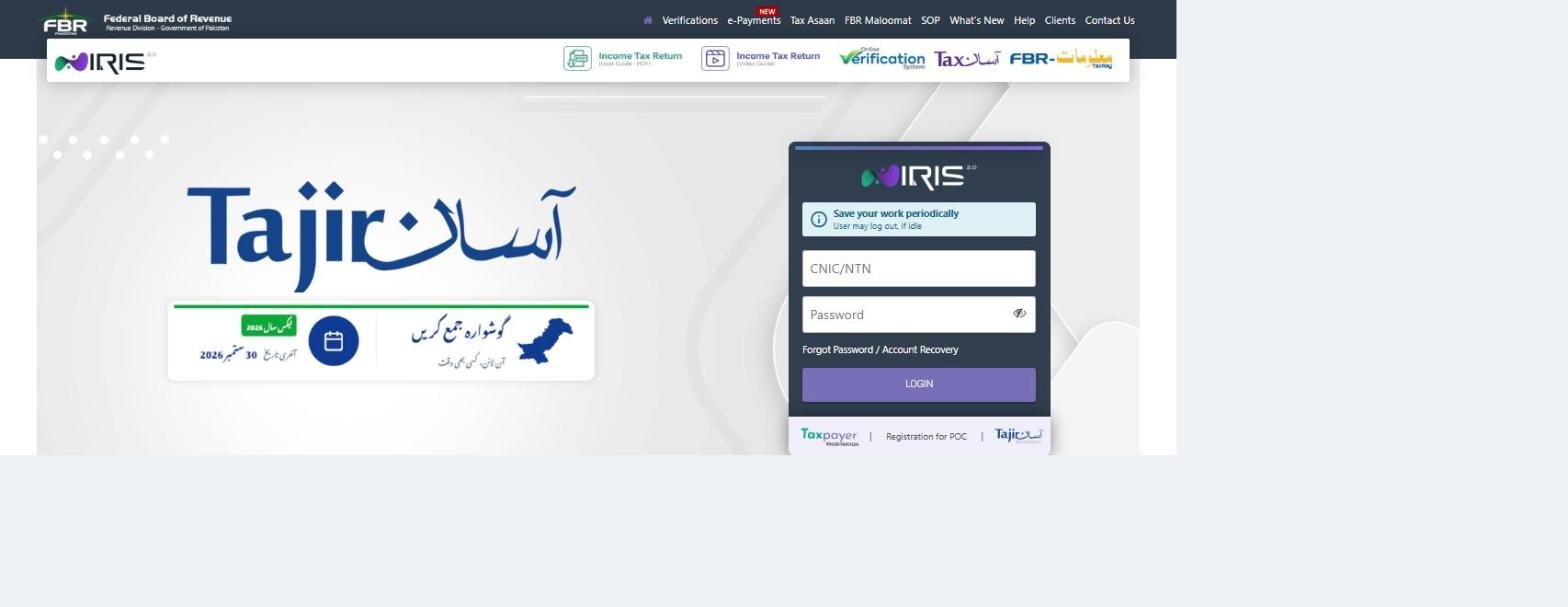
“Tax year” in Pakistan doesn’t always mean the calendar year you’d assume — and getting it wrong affects which return period your income actually falls into.
What Is a Normal Tax Year
Under Section 74 of the Income Tax Ordinance, a Normal Tax Year runs from July 1 to June 30 and is named after the calendar year in which it ends. So “Tax Year 2026” means the period July 1, 2025 to June 30, 2026. Income earned in that window gets reported on your Tax Year 2026 return.
Normal vs. Special Tax Year
Most individuals and businesses follow the Normal Tax Year automatically. A Special Tax Year is a different 12-month period a business can adopt with FBR’s approval — common for industries whose natural business cycle doesn’t align with July–June (certain agriculture-linked or seasonal businesses, for instance). If you haven’t specifically applied for and been granted a special tax year, you’re on the Normal Tax Year by default.
Why This Matters Practically
- Return filing deadlines are set relative to the tax year-end, not the calendar year — for salaried individuals and most taxpayers on the Normal Tax Year, the return for a given tax year is typically due by September 30 following the June 30 close, though FBR periodically extends this.
- Withholding tax reconciliation — the tax deducted at source throughout the July–June window is what gets reconciled against your final liability on that year’s return, not deductions within a calendar year.
- Filer status snapshots — the Active Taxpayer List updates based on tax-year filing compliance, so understanding which tax year you’re being checked against avoids confusion when your filer status doesn’t update the moment you expect.
A Quick Way to Check Which Tax Year You’re In
If today’s date falls between July 1 and June 30 of the following year, you’re inside that Normal Tax Year, named for the year it ends in. Example: any date from July 1, 2026 through June 30, 2027 falls in Tax Year 2027.
Frequently Asked Questions
No schema found.
No schema found.